

Creating Curious Learners: How ISK-Smile Nurtures Natural Inquiry in Early Childhood
- Elina Cherkezova-Veleva
- Sep 29, 2025
- 2 min read

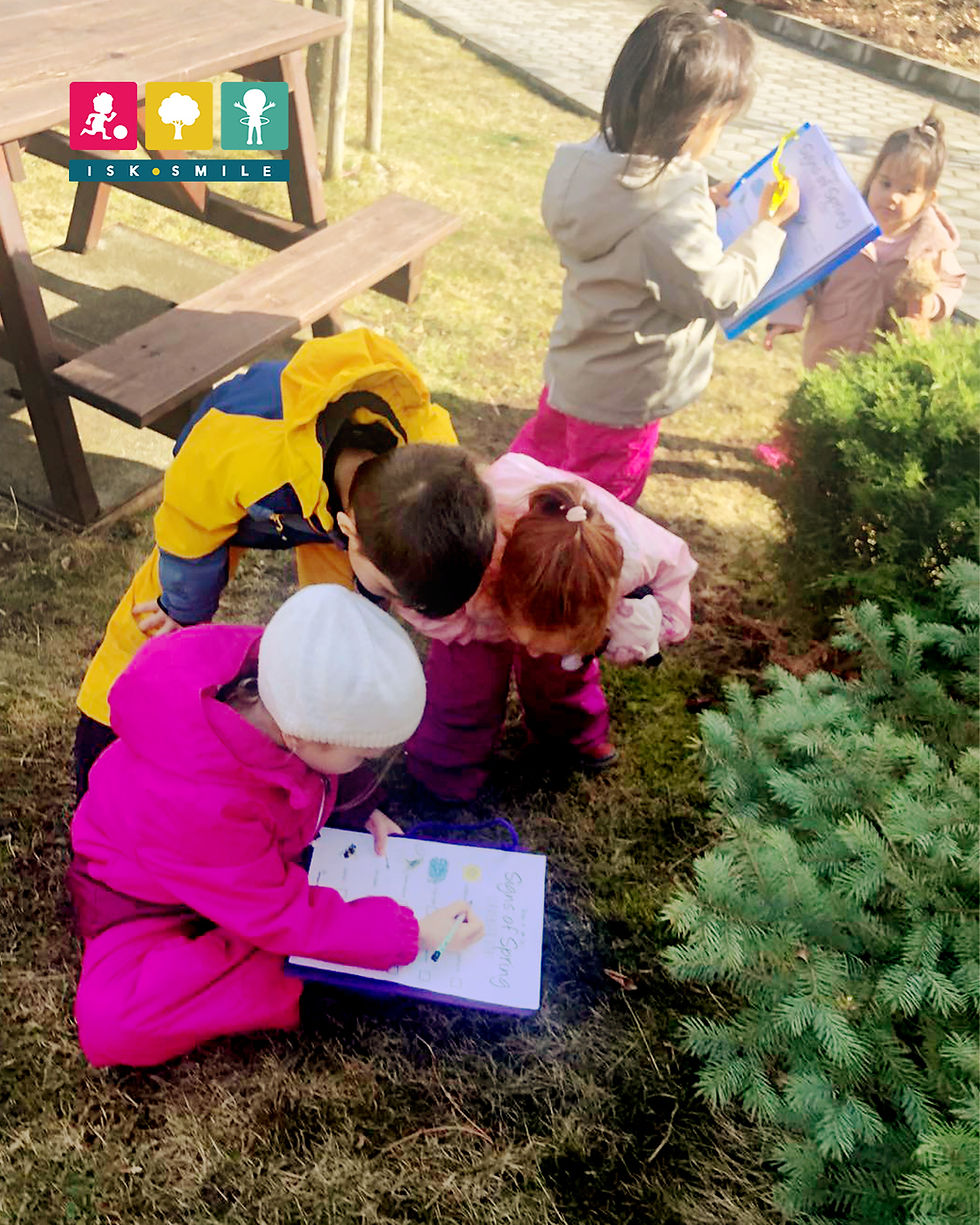
Curiosity is the starting point of all learning. At ISK-Smile, we don’t just answer questions—we encourage children to ask them. Through an inquiry-based approach rooted in the Primary Years Programme (PYP), we guide young learners to explore, wonder, and discover the world around them.
From the moment they step into the classroom, children are seen as active participants in their own learning. Our role as educators is to nurture that curiosity, provide meaningful contexts for exploration, and create an environment where asking "Why?" is not only welcomed, but celebrated.
Inquiry Starts with the Child
Every child is naturally curious. At ISK-Smile, we see this as a strength to build on. Whether it’s observing a snail in the garden, asking where rain comes from, or sorting buttons by color, we use these moments as springboards for learning.
Our teachers listen carefully to the children’s ideas and questions, and use them to design learning experiences that are both engaging and relevant. These experiences often cross multiple subject areas—including language, early math, science, and art—and encourage children to make connections between what they see, feel, and think.
The Learning Environment as a Teacher
We believe the classroom itself plays a key role in supporting inquiry. That’s why our learning centers are always evolving—filled with materials that invite exploration, encourage problem-solving, and support different types of learners.
Whether children are experimenting with textures in sensory activities, building structures, or sorting objects, they are actively thinking, testing ideas, and reflecting on what they find. These activities help develop their skills as thinkers, communicators, and risk-takers—all key attributes of the IB Learner Profile.
Asking Questions in Circle Time
Each day at ISK-Smile begins with circle time, where children share thoughts, pose questions, and reflect together. Teachers use stories, visuals, or real-world objects to prompt discussion. A simple photo of a forest or an animal may lead to questions like "Where do bears sleep?" or "Why do leaves fall?"
These conversations are never scripted. They are led by the children’s interests, and teachers build on them by introducing related vocabulary, activities, or stories in English. This helps support both language acquisition and cognitive development in a way that feels natural and exciting.
Encouraging a Growth Mindset
Inquiry-based learning also teaches children that not knowing is part of the process. Mistakes and misunderstandings are welcomed as learning opportunities. Teachers model curiosity themselves and celebrate effort, not just results.
This approach fosters resilience, open-mindedness, and a love for learning that extends beyond the classroom. Children begin to see the world as something they can explore and understand—one question at a time.
A Place to Wonder, Every Day
At ISK-Smile, we see curiosity as the foundation for lifelong learning. Through thoughtful planning, responsive teaching, and a rich, dynamic environment, we support children in becoming inquirers who are not only knowledgeable, but also eager to grow.
Because when children are encouraged to ask questions, follow their interests, and trust their thinking, the learning never stops.


Comments